Under the basic environmental preservation policy of striving to reduce our environmental impact and curb global warming in harmony with the global environment, the Group actively promotes initiatives for Water Resource Conservation.Our five plants (Kitakyushu, Amagasaki, Matsuyama, Mizushima, and Okayama), and the Matsuyama Plant of SANYO FINE CO., LTD., engage in production activities along the coast waters of the Seto Inland Sea and nearby waters, making wastewater management a key theme for preserving the beautiful environment of the Seto Inland Sea. Osaka Soda has also concluded agreements on pollution prevention and environmental preservation with the local communities where our plants are located, and we not only strive to comply with environment-related laws but also to prevent and reduce water pollution.
The environmental impact of our wastewater is primarily attributable to the emissions from processes for organic products, etc. (organic products, plastics, pharmaceutical intermediates, etc.). The Group manufactures a wide variety of chemical products, and water is an indispensable resource throughout these manufacturing processes. Specifically, water is used for heating, cooling, and cleaning in manufacturing processes, as well as in removal equipment for reaction solvents and chemicals. After use, nearly all water is treated appropriately before being discharged into rivers or the ocean. We actively work to reduce environmental impact by recycling cooling water and improving manufacturing process efficiency to reduce water withdrawal.
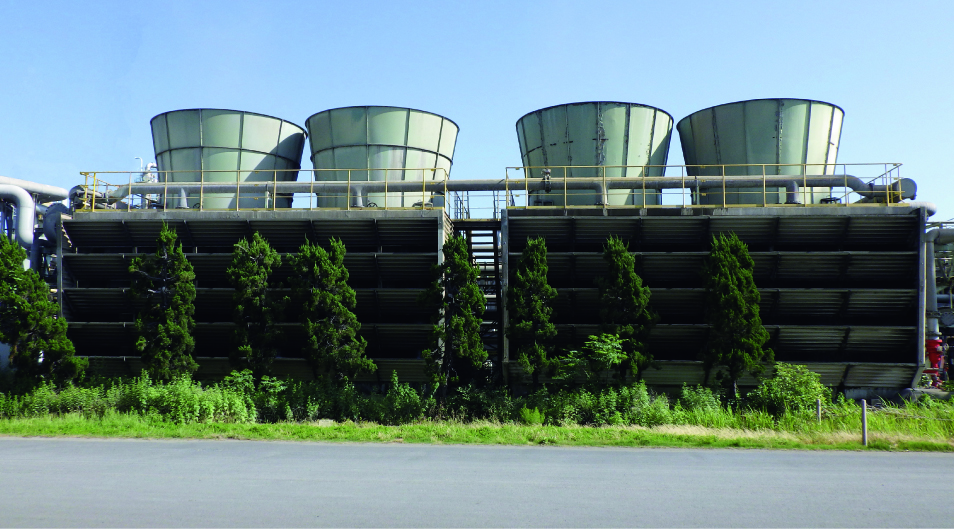
- 拡大
- Cooling water recycling equipment (cooling tower)
OsakaSoda Group recognizes that accurately identifying water risks associated with business activities, including those in water-stressed regions (where freshwater availability per capita is less than 1,700 m3), and achieving sustainable water use through stakeholder engagement are critical issues. To this end, we use Aqueduct, a water risk assessment tool developed by the World Resources Institute (WRI), to evaluate water risks in the regions where all of our domestic and overseas production sites operate.
Based on the survey results as of the end of March 2025, we confirmed that none of the Group’s plants that use water in their manufacturing processes are located in areas where water stress is rated “medium - high” or above.
Water withdrawal and wastewater discharge conditions at the Group’s plants and business sites are as follows.
(thousand tons)
|
Type |
FY2022 |
FY2023 |
FY2024 |
|
|
Water withdrawal |
Total |
33,458 |
31,646 |
33,792 |
|
Freshwater |
12,231 |
11,569 |
12,566 |
|
|
Brackish water or seawater |
21,172 |
20,018 |
21,171 |
|
|
Groundwater |
0 |
0 |
0 |
|
|
Third-party water source |
55 |
59 |
55 |
|
|
Water discharge |
Total |
32,328 |
30,635 |
32,373 |
|
Freshwater |
2,539 |
2,661 |
2,705 |
|
|
Brackish water or seawater |
29,653 |
27,829 |
29,529 |
|
|
Groundwater |
0 |
0 |
0 |
|
|
Third-party water destination |
135 |
145 |
139 |
(thousand tons)
|
Water withdrawal |
FY2022 |
FY2023 |
FY2024 |
||
|
Total |
Total |
33,458 |
31,646 |
33,792 |
|
|
Kitakyushu Plant |
270 |
273 |
305 |
||
|
Amagasaki Plant |
2,592 |
2,767 |
2,832 |
||
|
Matsuyama Plant |
19,106 |
19,246 |
19,116 |
||
|
Mizushima Plant |
10,225 |
8,291 |
10,288 |
||
|
Okayama Plant |
1,254 |
1,059 |
1,241 |
||
|
Research Center |
9 |
9 |
8 |
||
|
Headquarters |
2 |
2 |
2 |
||
|
Freshwater |
Total |
12,231 |
11,569 |
12,566 |
|
|
Kitakyushu Plant |
268 |
270 |
302 |
||
|
Amagasaki Plant |
2,579 |
2,759 |
2,822 |
||
|
Matsuyama Plant |
4,661 |
5,645 |
5,219 |
||
|
Mizushima Plant |
3,472 |
1,849 |
2,991 |
||
|
Okayama Plant |
1,248 |
1,044 |
1,230 |
||
|
Research Center |
3 |
2 |
2 |
||
|
Headquarters |
0 |
0 |
0 |
||
|
Brackish water or seawater |
Total |
21,172 |
20,018 |
21,171 |
|
|
Kitakyushu Plant |
0 |
0 |
0 |
||
|
Amagasaki Plant |
0 |
0 |
0 |
||
|
Matsuyama Plant |
14,429 |
13,586 |
13,882 |
||
|
Mizushima Plant |
6,743 |
6,432 |
7,289 |
||
|
Okayama Plant |
0 |
0 |
0 |
||
|
Research Center |
0 |
0 |
0 |
||
|
Headquarters |
0 |
0 |
0 |
||
|
Groundwater |
Renewable |
0 |
0 |
0 |
|
|
Non-renewable |
0 |
0 |
0 |
||
|
Third-party water source |
Total |
55 |
59 |
55 |
|
|
Kitakyushu Plant |
2 |
3 |
3 |
||
|
Amagasaki Plant |
13 |
8 |
10 |
||
|
Matsuyama Plant |
16 |
15 |
15 |
||
|
Mizushima Plant |
10 |
10 |
8 |
||
|
Okayama Plant |
6 |
15 |
11 |
||
|
Research Center |
6 |
6 |
6 |
||
|
Headquarters |
2 |
2 |
2 |
(thousand tons)
|
Water discharge |
FY2022 |
FY2023 |
FY2024 |
||
|
Total |
Total |
32,328 |
30,635 |
32,373 |
|
|
Kitakyushu Plant |
118 |
118 |
118 |
||
|
Amagasaki Plant |
2,530 |
2,653 |
2,697 |
||
|
Matsuyama Plant |
19,032 |
19,178 |
19,055 |
||
|
Mizushima Plant |
9,988 |
8,091 |
9,939 |
||
|
Okayama Plant |
649 |
585 |
554 |
||
|
Research Center |
9 |
9 |
8 |
||
|
Headquarters |
2 |
2 |
2 |
||
|
Freshwater |
Total |
2,539 |
2,661 |
2,705 |
|
|
Kitakyushu Plant |
0 |
0 |
0 |
||
|
Amagasaki Plant |
2,530 |
2,653 |
2,697 |
||
|
Matsuyama Plant |
0 |
0 |
0 |
||
|
Mizushima Plant |
0 |
0 |
0 |
||
|
Okayama Plant |
0 |
0 |
0 |
||
|
Research Center |
9 |
9 |
8 |
||
|
Headquarters |
0 |
0 |
0 |
||
|
Brackish water or seawater |
Total |
29,653 |
27,829 |
29,529 |
|
|
Kitakyushu Plant |
0 |
0 |
0 |
||
|
Amagasaki Plant |
0 |
0 |
0 |
||
|
Matsuyama Plant |
19,032 |
19,178 |
19,055 |
||
|
Mizushima Plant |
9,978 |
8,081 |
9,931 |
||
|
Okayama Plant |
643 |
570 |
543 |
||
|
Research Center |
0 |
0 |
0 |
||
|
Headquarters |
0 |
0 |
0 |
||
|
seawater |
Total |
0 |
0 |
0 |
|
|
Third-party water destination |
Total |
135 |
145 |
139 |
|
|
Kitakyushu Plant |
118 |
118 |
118 |
||
|
Amagasaki Plant |
0 |
0 |
0 |
||
|
Matsuyama Plant |
0 |
0 |
0 |
||
|
Mizushima Plant |
10 |
10 |
8 |
||
|
Okayama Plant |
6 |
15 |
11 |
||
|
Research Center |
0 |
0 |
0 |
||
|
Headquarters |
2 |
2 |
2 |
[Scope of calculation]
Osaka Soda (Kitakyushu Plant, Amagasaki Plant, Matsuyama Plant, Mizushima Plant, Okayama Plant, Research Center, Headquarters), Matsuyama Plant of SANYO FINE CO., LTD.
|
Unit |
FY2022 |
FY2023 |
FY2024 |
|
|
Total emissions |
ton |
74.0 |
55.0 |
73.5 |
|
Unit |
FY2022 |
FY2023 |
FY2024 |
|
|
Total emissions |
ton |
4.9 |
4.1 |
6.4 |
|
Unit |
FY2022 |
FY2023 |
FY2024 |
|
|
Total emissions |
ton |
249 |
184 |
221 |
|
Emissions per unit sales |
ton/million yen |
0.0034 |
0.0027 |
0.0031 |
[Scope of calculation]
Osaka Soda (Kitakyushu Plant, Amagasaki Plant, Matsuyama Plant, Mizushima Plant, Okayama Plant), Matsuyama Plant of SANYO FINE CO., LTD.