Under the basic environmental preservation policy of striving to reduce our environmental impact and curb global warming in harmony with the global environment, the Group actively works to make effective use of resources (cyclic use), which includes recycling and in-house reuse of waste. In managing waste, we strictly comply with laws and regulations while establishing site-specific management standards and implementing voluntary initiatives to reduce environmental impact. We also regard waste as a resource and work to create new value through its effective utilization.
Osaka Soda Group has set a target of reducing its final landfill rate for industrial waste to below 1% by fiscal year 2030, aiming to achieve zero emissions. The Group manufactures a wide range of chemical products, which results in the generation of various types of waste. These include sludge, waste liquids, ash from combusted solid fuels used for energy, cleaning fluids, waste plastics, and retired equipment. In particular, we actively promote the recycling of sludge, which accounts for approximately 40% of our waste generated in Japan.
Final landfill volume in fiscal year 2024 was 717 tons. Thanks to our recycling efforts, the final landfill rate declined 1.0 percentage point year on year to 2.4%. We continue to reduce landfill volume by focusing on recycling organic sludge and ash.
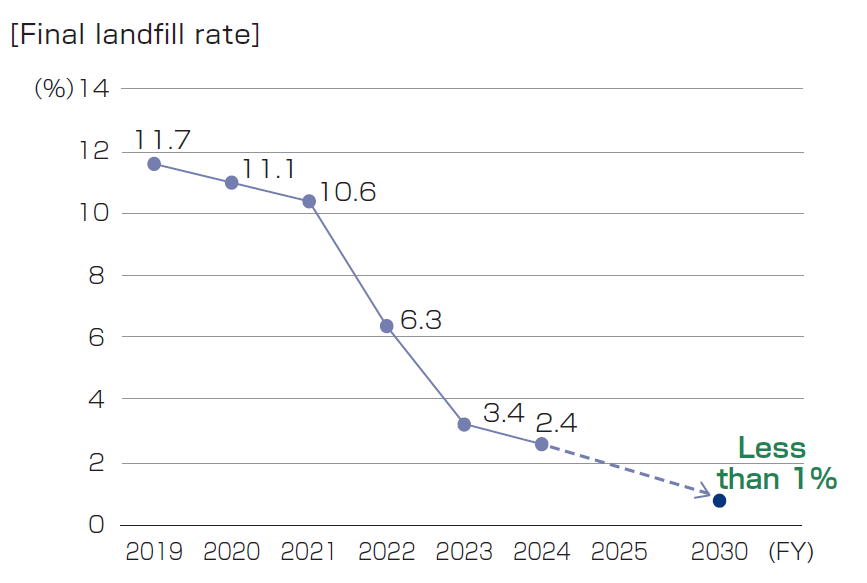
|
Unit |
FY2022 |
FY2023 |
FY2024 |
|
|
Industrial waste volume |
tons |
32,811 |
36,944 |
30,374 |
|
Recycling volume |
tons |
29,922 |
35,015 |
29,124 |
|
Recycling rate |
% |
91.2 |
94.8 |
95.9 |
|
Final landfill volume |
tons |
2,068 |
1,262 |
717 |
|
Final landfill rate |
% |
6.3 |
3.4 |
2.4 |
*Osaka Soda Group business sites in Japan
Osaka Soda operates electrolysis businesses at four plants primarily in western Japan, and actively promotes the recycling of brine mud generated by electrolysis. As a result of shifting from landfill disposal to recycling of brine mud, we achieved 100% recycling in fiscal year 2024.
Osaka Soda reduces waste through a system that recovers hydrochloric acid and steam from hydrochloric acid production facilities and liquid waste combustion facilities, reusing these as resources and energy. These facilities use organochlorine compounds, by-products of our manufacturing processes. The steam recovered through this process is reused as an energy source for the plant, helping reduce fossil fuel consumption.
Osaka Soda has concluded pollution control agreements with local governments for emissions of air pollutants such as SOx (sulfur oxides), NOx (nitrogen oxides), and ash dust, and adheres to voluntary control standards that exceed legal requirements.
|
Unit |
FY2022 |
FY2023 |
FY2024 |
|
|
SOx (sulfur oxides) |
ton |
2.4 |
3.2 |
3.9 |
|
NOx (nitrogen oxides) |
ton |
97.1 |
68.4 |
70.4 |
|
Ash dust |
ton |
4.4 |
4.7 |
5.7 |